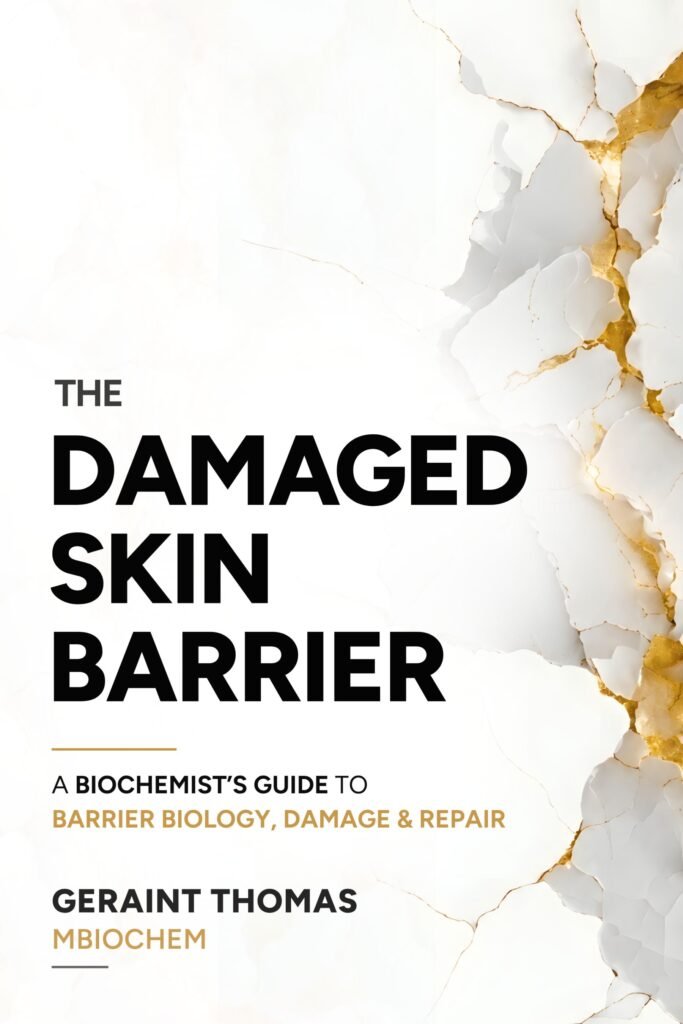
The Damaged Skin Barrier
Mechanism-based.
Evidence-informed.
No routines.
Mechanism-based.
Evidence-informed.
No routines.
A science-led explanation of why skin becomes reactive, unstable, and difficult to read — and why treating symptoms alone so often fails.
Introduction
After years of battling my skin: tightness one day, oiliness the next, random stinging, products that suddenly stopped working. My routines had become absurdly complex. I got quiet satisfaction from a lineup of serums as long as my arm, all arranged alphabetically in my bathroom cabinet, as if organisation alone could fix the confusion.
I found myself deep in the primary research, the papers and journals that eventually formed the framework of this book. Not to write a manual at first, but to find a way out of the cycle. The biology of the barrier, how it actually functions, why it breaks down, what truly allows it to rebuild, wasn’t being explained cohesively anywhere. Social media was full of hype and overnight transformations. Even well-meaning dermatologists sometimes leaned on long product lists that left me wondering whether the advice was honest opinion or subtle endorsement. I needed answers that didn’t exist in one clear, accessible place, so I built them myself. What I found changed how I thought about my skin entirely—and it’s what I’m about to give you.
This book is not prescriptive. It is mechanistic.
It won’t give you the perfect routine, a shopping list, or a timeline for retinol purging. What it will give you is a framework, grounded in how the barrier actually works, so you can make your own decisions based on what your skin is telling you right now.
Instead of chasing the dopamine hit of buying yet another serum in sleek clinical packaging, you’ll get a deeper satisfaction from putting it back on the shelf and thinking: “That’s not for me. I know better now.”
I spent too much time looking for this clarity. You’ve found it.
An explanation
Not a shopping list.
Mechanisms
Not Marketing.
Understanding
Not symptom chasing.
Why You Need This Book
Most skincare advice tells you what to apply, not why your skin changed in the first place. This book takes a different approach. It explains the barrier as a biological system under pressure, so symptoms that feel confusing, contradictory, or unpredictable start to make sense.
Symptoms stop feeling random
Why can skin feel greasy and tight at the same time? Why do products sting after months of seeming fine? Why does comfort sometimes return before true stability? This book explains how barrier state changes tolerance, reactivity, and recovery over time.
Your skin is responding logically
Barrier instability is not random failure. It is a biological response to cumulative stress, disrupted regulation, and changing thresholds. Instead of framing skin as unpredictable, this book explains why it behaves the way it does — and why reducing load matters more than chasing perfect products.
Your Skin Is a System, Not a Skin Type
Dry. Oily. Sensitive. Reactive. These labels often describe one stressed biological system, not separate problems. This book explains the barrier as coordinated infrastructure — structure, regulation, feedback, tolerance, and thresholds — so contradictory symptoms start to make sense.
Who This Book is for
This book is written for readers who are tired of guessing, trial and error, and skincare advice that explains everything except why their skin changed.
If your routine keeps getting longer, but your skin keeps getting worse
If your skin feels tight and oily at the same time
If products suddenly sting, stop working, or become hard to tolerate
If you prefer biology over buzzwords
About the Author
Geraint Thomas
Geraint Thomas holds an MRes in Biochemistry and writes about skin through the lens of mechanism, regulation, and biological stress. The Damaged Skin Barrier was written to give readers a clearer framework for understanding why skin becomes reactive, unstable, and difficult to manage — without reducing those questions to routines, trends, or product lists.
Stop asking what is wrong with your skin.
Start asking what it is responding to.
Explore the book, read the introduction, and see whether this framework matches the questions you have been trying to answer.